
When Executive Turnover in Healthcare Systems Happens, Is Your Succession Plan Ready?
Intense financial and operational pressures, shifting board and strategic expectations, workforce challenges, policy changes, and chronic burnout are contributing to increased hospital C-level executive turnover, especially when compared to other industry sectors.¹
What impact does this trend have on hospital boards and heads of talent for healthcare systems? Succession planning elevates as a critical need rather than a nice-to-have. But all too often, succession planning is addressed too late, leaving critical roles without viable successor candidates. Alternatively, organizations may rely on conventional succession planning models like the "9 Box" and conduct talent discussions privately.
Research from The Governance Institute found that only 45% of hospitals and health systems had a CEO and senior executive succession plan, despite 80% identifying succession planning as a critical board responsibility.²
Imagine the impact if organizations reimagined what succession planning could look like if treated the same as strategic business planning at the highest level.
Beginning with the business planning outlook for the respective system, consider:
- What does the critical talent (5-10%) look like today, and what will it look like three and five years from now?
- What does the current bench look like, and what gaps in current and future talent and aligned competencies exist?
- How are potential successors being assessed against the critical needs of the role, including technical skills, leadership behaviors, and personal motivators?
- How do talent systems, including selection, assessment, development, and rewards, intersect to support one another?
This is where Paragon Leadership supports clients beyond executive coaching. Coaching requests often come too late, when an executive has a short runway due to organizational changes, a realization of misalignment with future strategic direction, evolving skill requirements, or a shift in motivational drive or interest. Instead, organizations can take a more systemic approach to talent and succession planning:
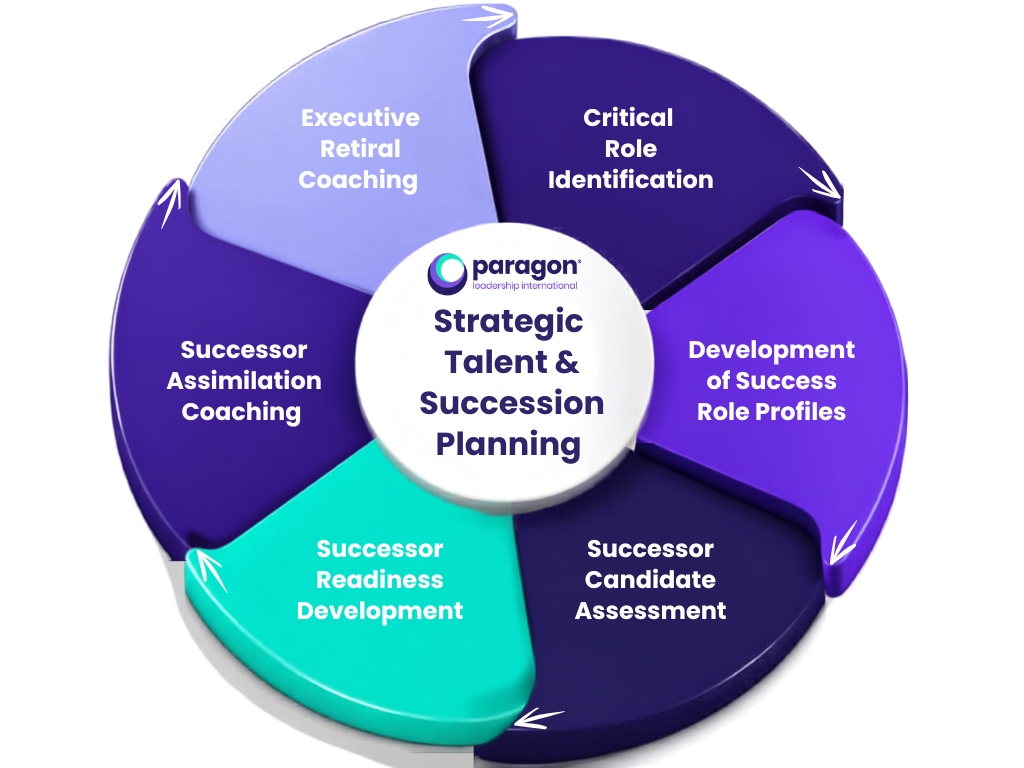
Like anything else, applying a systemic talent methodology may require more time initially, but it can pay dividends for an organization in the long run.
Sources:
1. Peisert, J., et al. Hospital Chief Executive Officer Turnover: A Systematic Review. 2025. https://pmc.ncbi.nlm.nih.gov/articles/PMC12105952/
2. The Governance Institute. The Governance Institute’s 2019 Biennial Survey of Hospitals and Healthcare Systems. 2019. https://nrchealth.com/wp-content/uploads/2020/01/2019_BiennialSurvey_Transform-Governance.pdf
Let's Connect
Ready to develop the future face of leadership in your organization?